

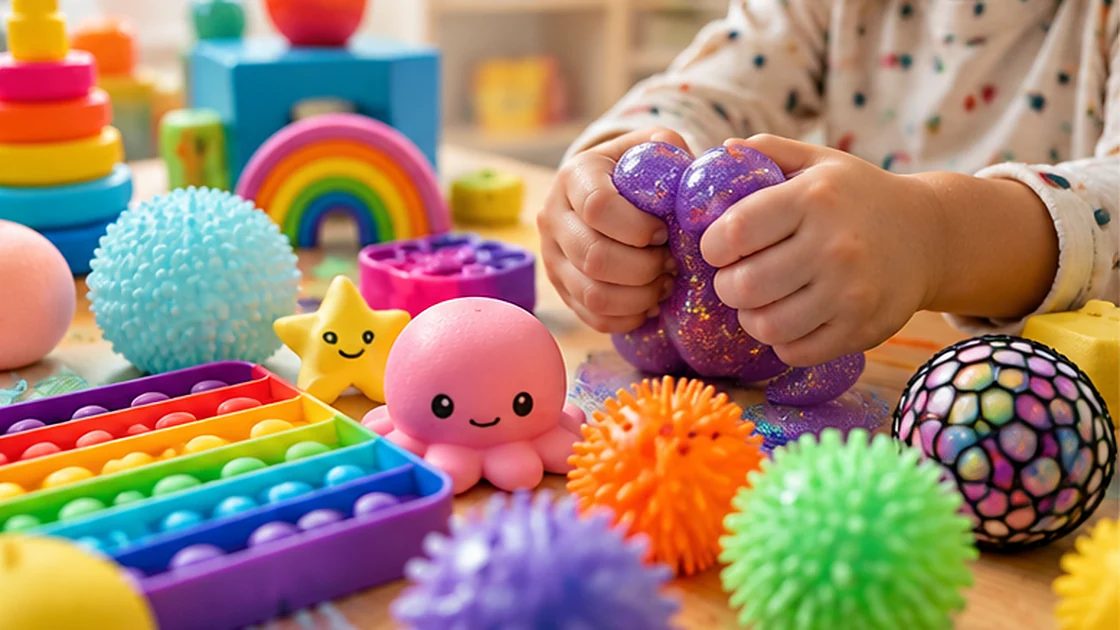
How to assess squishy sensory toys for children, including small parts, wear and hygiene.
Age labels matter
A toy that feels soft is not necessarily suitable for toddlers. Detachable eyes, beads, small decorations or leaking gel-like fillings can create hazards. Review age guidance, manufacturer details and warnings. Consider the child’s actual behaviour, especially whether they still put objects in their mouth.
Inspect materials and wear
Stop using a toy if its surface splits, leaks, grows sticky or sheds parts. Check whether its materials and cleaning method are documented. Avoid applying aggressive chemicals or solvents to an unknown material. Shared classroom sensory toys need routine inspection and suitable cleaning.
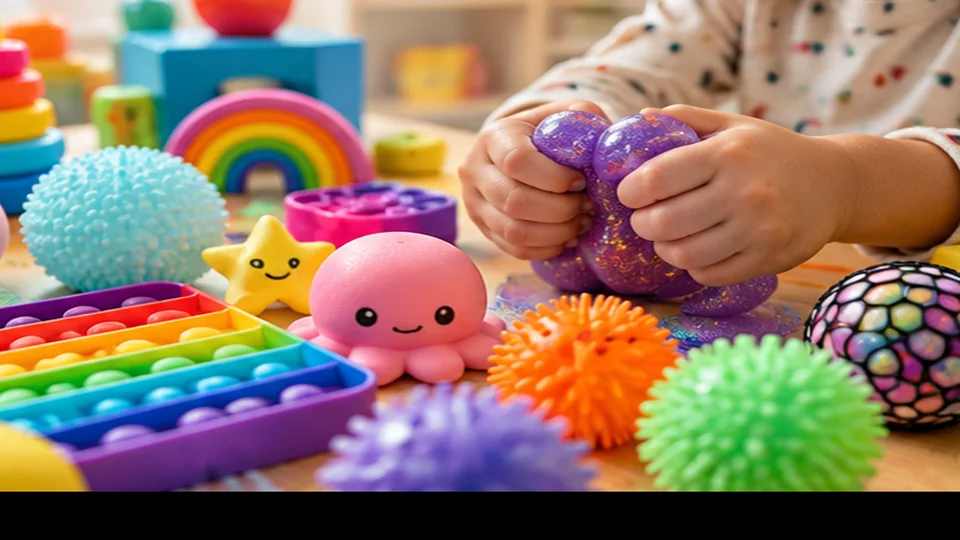
Sensory play has limits
Squishing and squeezing can be enjoyable, but not every child likes the same texture. A toy should not be presented as a medical or therapeutic solution without professional context. Follow the child’s comfort and supervise use according to age and the product’s design.
Practical checklist
- Check for loose parts and damaged surfaces.
- Read age and cleaning guidance.
- Discard leaking or torn toys.