

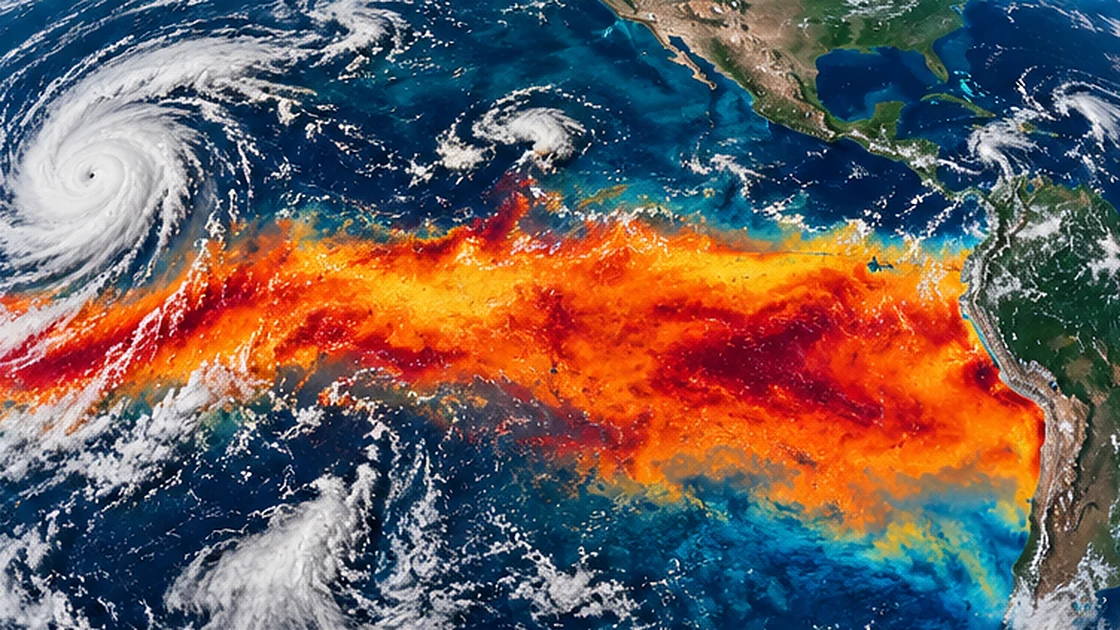
Understand El Niño, the ENSO climate pattern and the limits of forecasting local weather from one global signal.
A climate pattern, not a daily weather forecast
El Niño is the warm phase of the El Niño–Southern Oscillation, involving changes in tropical Pacific sea-surface temperatures and atmospheric circulation. It can influence seasonal probabilities in different regions. It cannot, by itself, predict whether it will rain in a particular city next Tuesday.
The October 2026 official outlook
NOAA’s Climate Prediction Center issued an El Niño advisory in its October 8, 2026 ENSO discussion. Such outlooks combine observations and model estimates and may change as new data arrives. Seasonal probabilities should not be treated as guaranteed local outcomes; use regional weather agencies for operational decisions.
La Niña and neutral conditions
ENSO cycles through El Niño, La Niña and neutral conditions. La Niña generally involves cooler-than-average conditions in the monitored tropical Pacific region, but its impacts are not a perfect mirror image of El Niño. Read the forecast period and uncertainty, especially when dramatic headlines imply one climate pattern explains every weather event.
Practical checklist
- Check the date on the NOAA advisory.
- Separate seasonal probability from daily forecasts.
- Use local weather services for practical risks.